TL;DR
Addiction is a chronic condition. Treatment manages it, and care often needs to continue after the residential or day program ends.[1]
Relapse is common and does not mean treatment failed. It is a signal to resume, change, or add treatment.[1]
Addiction treatment New Jersey aftercare usually means stepping down through lower levels of care, plus peer support, therapy, and a written plan.
Relapse after a long break can be dangerous, because your body may no longer tolerate your old dose.[1]
Families help most by learning the warning signs and keeping the door open without taking over.
Table of Contents
What aftercare looks like in addiction treatment New Jersey programs
Creating your personal aftercare plan with Wellness Recovery Center of New Jersey
Introduction
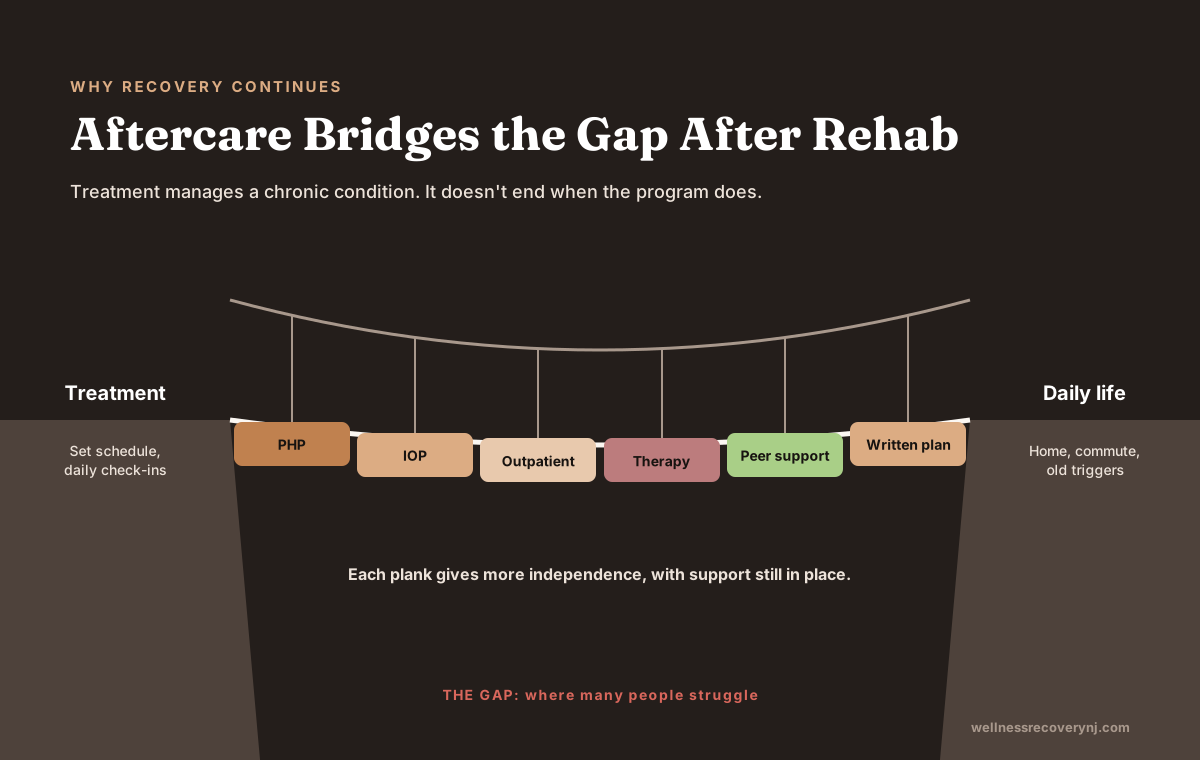
The last day of rehab can feel strange. For weeks, your schedule was set, your meals were made, and people were checking in on you. Then you walk out, and the house, the commute, and the phone in your pocket are all exactly where you left them.
That gap is where many people struggle, which is why addiction treatment New Jersey programs plan for what comes next before discharge. This article explains what aftercare is, how relapse works, what you and your family can do, and how Wellness Recovery Center of New Jersey builds a plan around you.
Why recovery doesn't end when rehab does
The National Institute on Drug Abuse (NIDA) says plainly that addiction treatment is not a cure. It is a way of managing a condition, much like treatment for heart disease or asthma.[1] Treatment helps you counteract addiction's effects on your brain and behavior and regain control of your life. It does not erase the risk.
The National Institute on Alcohol Abuse and Alcoholism (NIAAA) describes alcohol use disorder as a brain disorder, and notes that lasting changes in the brain make people vulnerable to relapse.[2] The same source also gives real reason for hope: evidence-based treatment with behavioral therapy, mutual-support groups, and medication can help people achieve and maintain recovery, however severe the problem looked.[2]
Rehab starts the work. Aftercare is how you keep doing it when life gets loud again.
What aftercare looks like in addiction treatment New Jersey programs
Aftercare is not one program. It is a set of steps that gradually give you more independence while keeping support in place. The American Society of Addiction Medicine (ASAM) publishes the ASAM Criteria, a set of guidelines for building person-centered treatment plans for people with addiction and co-occurring conditions.[3] Many programs use that framework to decide how much care you need at each stage.
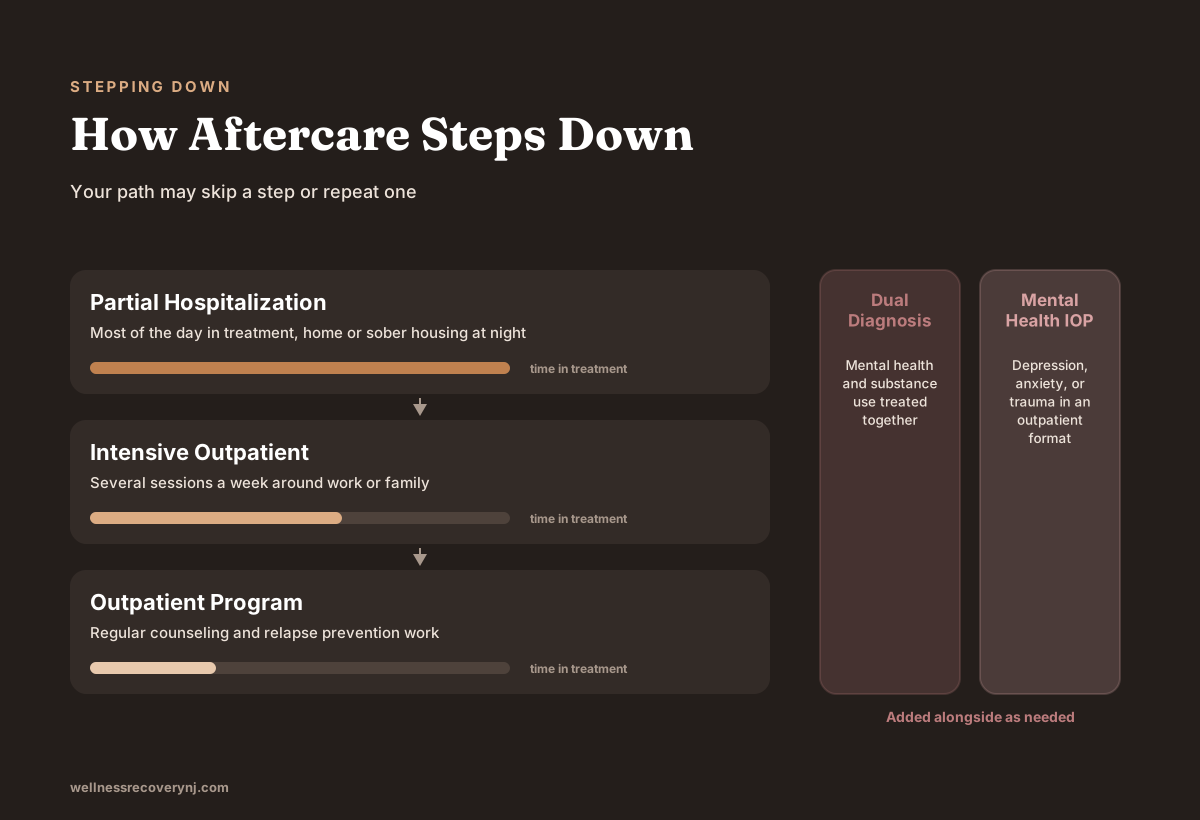
At Wellness Recovery Center of New Jersey, that stepping down can look like the table below. Your own path may skip a step or repeat one.
Level of care | Who it fits | What it gives you |
|---|---|---|
Needs daily structure but can sleep at home or in sober housing | Most of the day in treatment, with medical and therapy support | |
Stable enough to work or care for family, still needs frequent contact | Several therapy sessions a week around your schedule | |
Further along, wants ongoing check-ins | Regular counseling and relapse prevention work | |
Has a mental health condition alongside substance use | Treatment for both conditions together | |
Needs more support for depression, anxiety, or trauma | Structured mental health care in an outpatient format |
If you work, you may also want to read how flexible programs fit around a job in our guide to NJ alcohol treatment for working professionals. Questions about cost are covered in how to verify insurance coverage before you call.
Understanding relapse: warning signs and common triggers
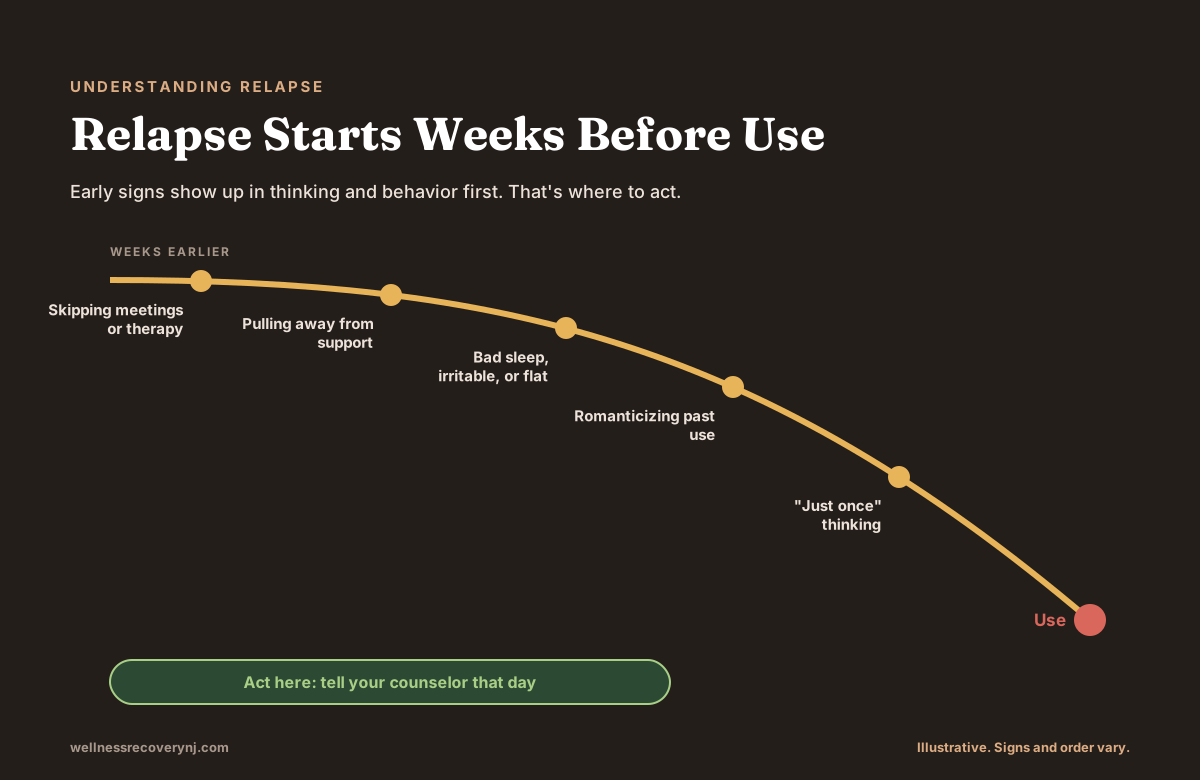
Relapse rarely begins with a drink or a pill. It usually begins weeks earlier, with changes in thinking and behavior. NIDA compares relapse rates for substance use disorders with those for high blood pressure and asthma and finds them similar.[1] That is not an excuse. It is a reason to watch for early signs the way you would watch a chronic illness.
Common early warning signs include:
Skipping meetings, appointments, or therapy sessions
Pulling away from people who support your recovery
Sleeping badly, or feeling anxious, irritable, or flat
Romanticizing past use, or contact with old using friends
Thinking you can use "just once" or only on weekends
Triggers vary. Stress at work, conflict at home, loneliness, certain places, and unaddressed mental health symptoms all show up often. NIAAA lists depression, post-traumatic stress disorder, and ADHD among conditions that are associated with a higher risk of alcohol use disorder.[2] If panic or worry is a trigger for you, our post on anxiety attacks after drinking or quitting explains why it happens.
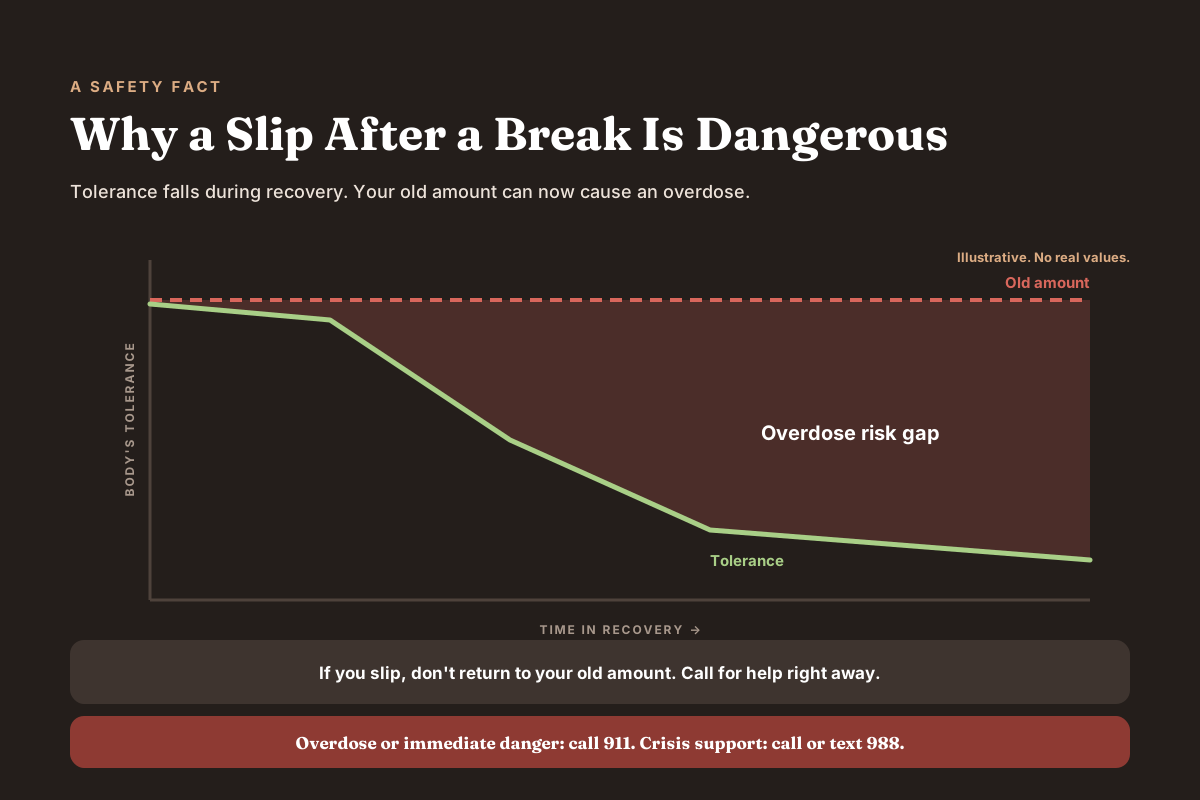
One fact matters more than the rest. NIDA warns that for some drugs, relapse can be deadly: if a person uses as much as they did before quitting, they can easily overdose.[1] Your tolerance falls during recovery. If you slip, do not return to your old amount, and call for help.
Evidence-based relapse prevention strategies
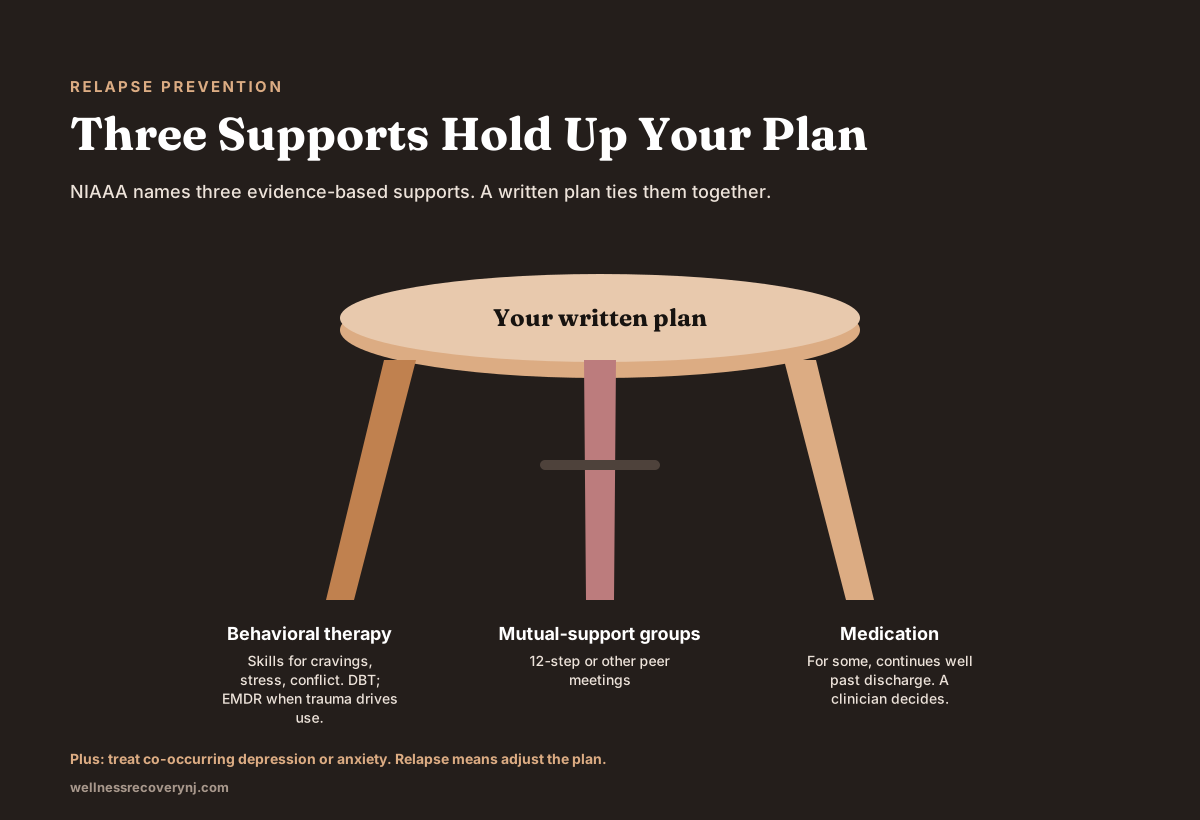
Good relapse prevention is practical. It gives you something to do at 9 p.m. on a bad Tuesday. NIAAA names three evidence-based supports: behavioral therapies, mutual-support groups, and medications.[2]
Behavioral therapy. Skills for handling cravings, stress, and conflict. Dialectical behavior therapy is one option, and EMDR can help when trauma drives use.
Medication. For some people, medication continues well past discharge. See how medication helps you quit drinking.
Treating co-occurring conditions. Depression or anxiety left alone can pull you back. Our piece on depression and substance use in men covers one common version of this.
A written plan. Your triggers, your first three calls, and what you will do in the first hour of a craving.
NIDA also says that relapse signals a need to resume, modify, or try another treatment.[1] Adjusting the plan is part of the plan.
Building a sober support network in New Jersey
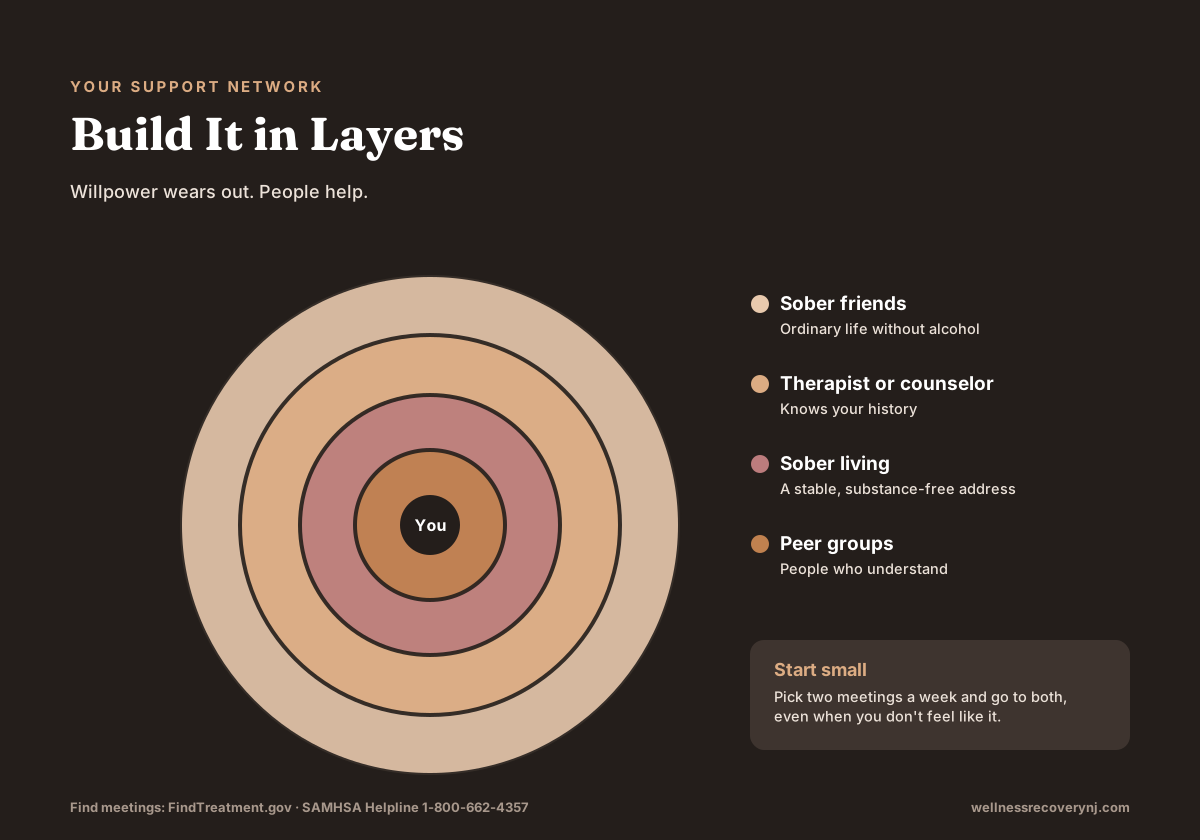
Willpower alone wears out. People help. The Substance Abuse and Mental Health Services Administration (SAMHSA) maintains a recovery and support section, along with FindTreatment.gov, a national locator you can search by location, and a National Helpline.[4] It is a good place to find meetings, programs, and providers near your home.
A network usually has several layers. Peer groups such as 12-step or other mutual-support meetings give you people who understand. Sober living gives you a stable, substance-free address while you rebuild. Your therapist or counselor knows your history. One or two friends who do not drink or use give you ordinary life.
Start small. Pick two meetings a week and go to both, even when you do not feel like it. Many people in New Jersey find that the same faces, week after week, are what get them out the door.
How families can support long-term recovery
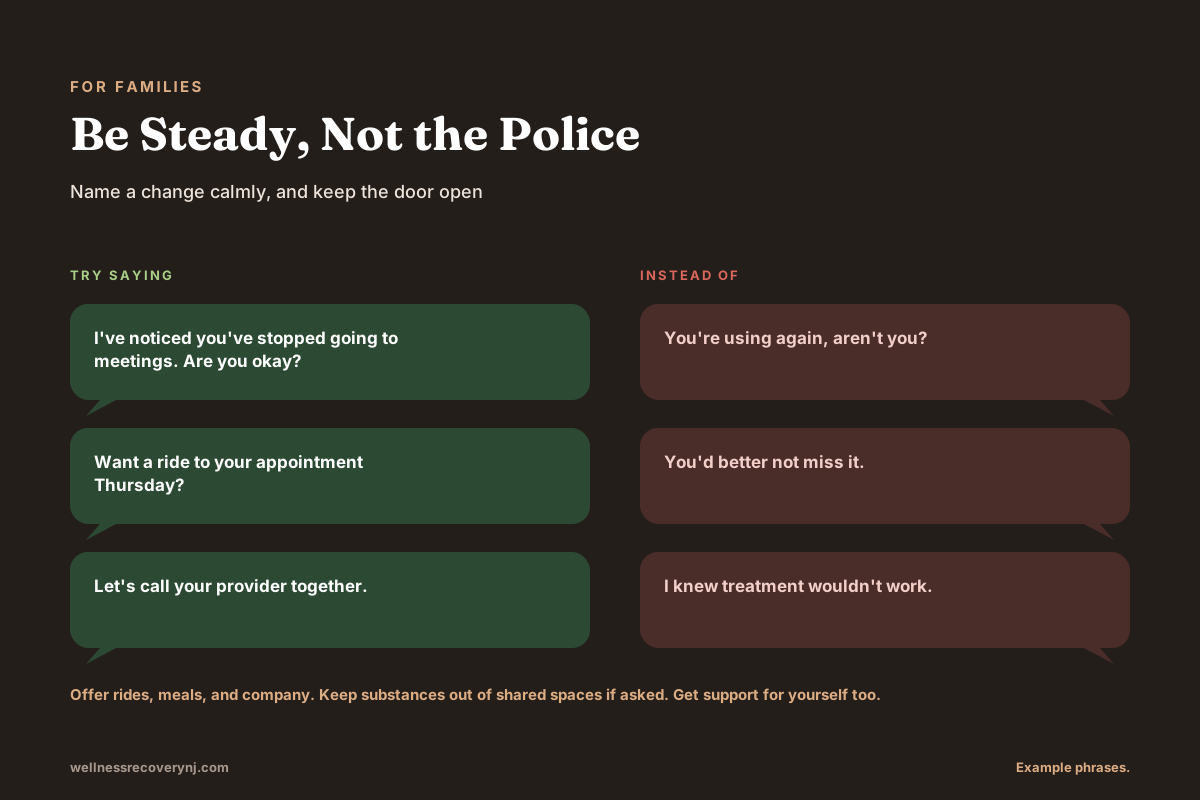
If someone you love just finished treatment, you may be relieved and frightened in the same breath. That is normal. Your role is not to police them. It is to be steady.
Learn the warning signs listed above, so you can name a change calmly: "I've noticed you've stopped going to meetings. Are you okay?" Keep alcohol and drugs out of shared spaces if your family member asks. Offer rides, meals, and company rather than lectures.
If a relapse happens, remember what NIDA says: it does not mean treatment has failed.[1] Respond the way you would if a relative with diabetes had a bad month. Help them call their provider quickly. And look after yourself too, because families need support of their own.
Creating your personal aftercare plan with Wellness Recovery Center of New Jersey
The best time to build an aftercare plan is before you leave treatment. At Wellness Recovery Center of New Jersey, your care team works with you on the next level of care, your appointments, your housing, and your supports. The plan is written down and reviewed as your life changes.
A solid plan answers these questions:
Which program or therapy comes after discharge, and on what dates?
Which meetings or groups will you attend each week?
Who do you call first when a craving hits, and who is second?
What are your top three triggers, and what will you do about each?
Where will you live, and is it safe for your recovery?
If you are not sure where to start, our guide to what makes a great addiction rehab in New Jersey can help you judge any program, and our website lists every service we offer.
Frequently Asked Questions
Q: What is aftercare, and why is it important after addiction treatment in New Jersey?
A: Aftercare is the ongoing support you receive once your main treatment ends. It can include outpatient therapy, medication, peer groups, and sober living. It matters because addiction is a chronic condition that is managed, not cured.[1] Support after discharge helps you keep what you learned in treatment.
Q: How long should I stay in an aftercare program following rehab?
A: There is no single right length. It depends on your history, your health, and how stable your life is. Many people step down gradually over months, and some keep a light level of support for years. Your care team can set a timeline and adjust it. We will not give you a number that fits everyone, because none exists.
Q: What are the early warning signs of relapse, and what should I do if I notice them?
A: Watch for skipped meetings, isolation, poor sleep, rising stress, and thoughts of using. If you notice them, tell your counselor or a trusted person that day. Early contact is easier than late repair. If you do use, do not take your old amount, because overdose risk is high after a break.[1]
Q: Is relapse a sign that treatment failed?
A: No. NIDA states that relapse does not mean treatment has failed, and that relapse rates for substance use disorders are similar to those for other chronic illnesses.[1] It means your plan needs to be resumed, changed, or added to.
Q: What aftercare options are available in New Jersey, such as outpatient programs, sober living, and support groups?
A: You can step down through partial hospitalization, intensive outpatient, and standard outpatient care, and add dual diagnosis or mental health treatment if needed. Sober living and mutual-support groups fill in the rest. SAMHSA's FindTreatment.gov can help you locate programs near you.[4]
Conclusion
Rehab gives you a foundation. What you build on it over the next months and years is what holds. Good addiction treatment New Jersey programs plan that second stage with you: lower levels of care, therapy, medication when it helps, peer support, and a family that knows what to watch for.
If you are finishing treatment, or you are worried about someone who has, Wellness Recovery Center of New Jersey can help you build an aftercare plan. Call us or visit wellnessrecoverynj.com and ask for an aftercare conversation. If you are in immediate danger, call 988 or 911.
References
National Institute on Drug Abuse. Treatment and Recovery. Drugs, Brains, and Behavior: The Science of Addiction. https://nida.nih.gov/publications/drugs-brains-behavior-science-addiction/treatment-recovery
National Institute on Alcohol Abuse and Alcoholism. Understanding Alcohol Use Disorder. https://www.niaaa.nih.gov/alcohols-effects-health/alcohol-use-disorder
American Society of Addiction Medicine. ASAM: American Society of Addiction Medicine. https://www.asam.org
Substance Abuse and Mental Health Services Administration. Recovery and Support. https://www.samhsa.gov/find-help/recovery
Ready to talk to someone?
Confidential, judgment-free, available 24/7.