TL;DR
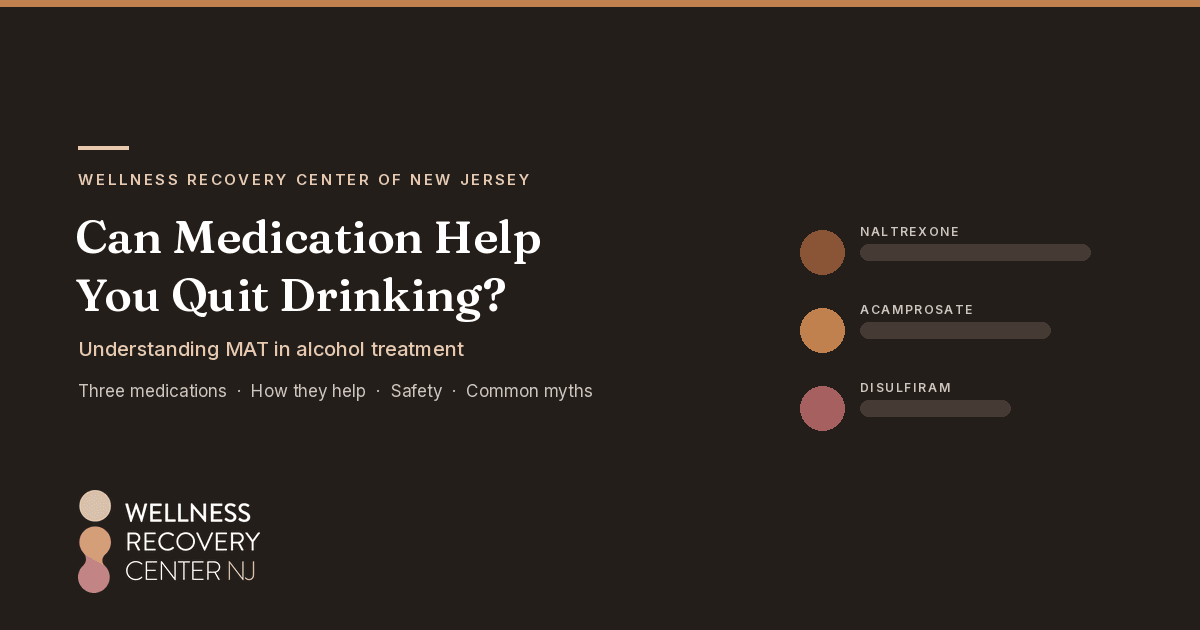
Three medications are FDA-approved for alcohol use disorder: naltrexone, acamprosate, and disulfiram. They work in different ways.
Medication does not replace willpower or therapy. It lowers cravings and makes it easier to use the other parts of treatment.
Taking medication for a medical condition is not "swapping one drug for another." None of these three medications is a substitute for alcohol.
A medical review comes first. Liver function, other medications, and your drinking history all affect which option fits.
Alcohol treatment New Jersey programs can combine medication with therapy at several levels of care.
Table of Contents
What is medication-assisted treatment (MAT) for alcohol use disorder?
FDA-approved medications for alcohol treatment: naltrexone, acamprosate, and disulfiram
Who is a good candidate for MAT? Safety, side effects, and medical supervision
What to expect when starting alcohol treatment in New Jersey
Introduction
You have tried to cut back. Maybe you have tried to stop, more than once. The urge showed up anyway, usually at the same hour, in the same mood, and you lost the argument with yourself again. That does not mean you are weak. Alcohol changed how your brain handles reward and stress, and willpower alone is a poor match for that.
Medication is one tool that can help. This article explains how medication-assisted treatment (MAT) works, what each medication does, who it suits, and what it looks like to start. If you are looking into alcohol treatment New Jersey has to offer for yourself or someone you love, this will give you straight answers to bring to a first conversation. If you are worried about withdrawal itself, our guide to what happens during alcohol detox covers that separately.
What is medication-assisted treatment (MAT) for alcohol use disorder?
MAT means using an FDA-approved medication, along with counseling and other support, to treat a substance use disorder. SAMHSA, the federal agency that oversees behavioral health services, lists medications as one of the core treatment options for substance use disorders.[1]
Alcohol use disorder is the clinical term for a pattern of drinking that causes distress or harm and is hard to control. It is diagnosed using criteria in the DSM-5-TR, the manual mental health professionals use to define and classify conditions.[2] The diagnosis ranges from mild to severe. Medication is not only for the severe end, though a clinician will help you decide.

FDA-approved medications for alcohol treatment: naltrexone, acamprosate, and disulfiram
Each medication targets a different problem. The table below compares them. Your prescriber makes the final call.

Medication | What it does | How it is taken | Often a fit when |
|---|---|---|---|
Naltrexone | Blocks some of the rewarding effect of drinking and reduces cravings | Daily pill or monthly injection | You are still drinking, or you want to cut craving and the pull to continue after a slip |
Acamprosate | Helps steady brain chemistry disrupted by long-term drinking, easing the discomfort that drives relapse | Pill, usually taken multiple times a day | You have already stopped drinking and want help staying stopped |
Disulfiram | Causes an unpleasant physical reaction if you drink | Daily pill | You are highly motivated, abstinent, and have someone supporting daily use |
Naltrexone and acamprosate act on cravings. Disulfiram works differently: it does not reduce the urge, it makes drinking physically unpleasant. That is why it depends so much on commitment and support. Our prescribers go through these tradeoffs with you instead of picking a pill off a shelf.
How MAT reduces cravings and supports long-term recovery
Early recovery is hard partly because the brain expects alcohol. Cravings spike, sleep is poor, and mood is unstable. Medication can turn that volume down so you can think clearly enough to use what you learn in therapy.
In daily life, that can look like this:
Fewer or less intense urges in the evening or after stress.
A slip that stays a slip, instead of becoming a full return to heavy drinking.
More energy left over for sleep, work, and relationships.
Medication does not remove the reasons you drank. It buys you room to deal with them. In alcohol treatment New Jersey patients often tell us the first real benefit is simply quiet: the constant bargaining stops.

Why medication works best with therapy and support
A pill does not teach you what to do when your boss yells or your marriage is strained. Therapy does. The American Society of Addiction Medicine (ASAM), a medical society of more than 8,000 addiction physicians and clinicians, publishes guidelines that use a person-centered approach to build treatment plans, including for people with co-occurring conditions.[3]
At Wellness Recovery Center of New Jersey, medication can sit alongside several levels of care:
Partial hospitalization for daily structure while you sleep at home.
Intensive outpatient for several sessions a week around work or family.
Outpatient care for ongoing support once you are stable.
If anxiety, depression, or trauma is part of the picture, dual diagnosis treatment and the mental health IOP address both at once. Trauma-focused methods such as EMDR can be part of that work.

Who is a good candidate for MAT? Safety, side effects, and medical supervision
Many adults with alcohol use disorder are candidates. What matters is a medical review before you start. We look at your liver and kidney health, other medications you take, pregnancy, your drinking pattern, and any history of withdrawal complications.
Some points to know:
Naltrexone can cause nausea, headache, or tiredness. It is not safe if you take opioid pain medication, so tell your prescriber about everything you use.
Acamprosate is often well tolerated but needs adjustment for people with kidney problems.
Disulfiram can make you seriously ill if you drink, and even small amounts of alcohol in products like mouthwash or some sauces can matter. It is not right for everyone.
Report side effects instead of enduring them quietly. Doses and drugs can be changed. Blood work and regular check-ins are a normal part of safe care.
Common myths about using medication to quit drinking
"It is just trading one drug for another." The three approved medications are not alcohol substitutes and do not produce a high. They treat a medical condition, the way insulin treats diabetes.
"Real recovery means doing it without help." Recovery is measured by your health and life, not by how little help you used. SAMHSA lists medication as a standard treatment option, not a last resort.[1]
"I have to be completely sober to start." Not always. Naltrexone, for example, can be started while someone is still drinking, under medical guidance.
"If I take it, I do not need therapy." Medication helps most when paired with counseling and support, as described above.
What to expect when starting alcohol treatment in New Jersey
The first step is an assessment. You talk with a clinician about your drinking, your health, your mental health, and your goals. Then a medical provider reviews whether medication fits and which one. You do not need to have everything figured out before you call.
From there, we build a plan that matches your needs, whether that is a more structured program or a lighter schedule. If you are weighing programs, our piece on what makes a great addiction rehab in New Jersey lists what to ask. And if you are unsure whether it is time, see 6 signs it is time to seek rehab. Visit wellnessrecoverynj.com to learn more about our approach to alcohol treatment New Jersey families can reach close to home.

Frequently Asked Questions
Q: Can medication really help me stop drinking?
A: Yes, for many people. Naltrexone and acamprosate reduce cravings, and disulfiram discourages drinking by making it physically unpleasant. Medication works best alongside therapy and support, and results vary from person to person.
Q: Is MAT just replacing one drug with another?
A: No. The medications used for alcohol use disorder do not give you a high and are not a form of alcohol. They treat the brain changes that make stopping so hard.
Q: Which medication for alcohol use disorder is right for me?
A: It depends on your health, whether you are still drinking, your other medications, and your goals. A medical provider reviews these with you before recommending one. We do not choose a medication before that review.
Q: How long do I need to stay on medication for alcohol treatment?
A: There is no single timeline. Some people take medication for several months, others longer. Your provider checks in regularly and adjusts the plan with you, and you should not stop suddenly without talking to them first.
Q: Does alcohol treatment in New Jersey accept insurance for MAT, and how do I get started?
A: Many insurance plans cover addiction treatment, including medication, but coverage differs by plan. Call Wellness Recovery Center of New Jersey and we can check your benefits and schedule an assessment. Visit our website to reach us.
Conclusion
Medication can lower cravings, steady the early weeks, and give therapy a better chance to work. It is a medical treatment for a medical condition, not a shortcut or a failure. If you want alcohol treatment New Jersey residents can trust, Wellness Recovery Center of New Jersey can walk you through an assessment and talk honestly about whether MAT fits. Call us today, or have a family member call on your behalf. One conversation is enough to start.
References
SAMHSA. (n.d.). Treatment Options for Substance Use Disorder. https://www.samhsa.gov/substance-use/treatment/medications-substance-use-disorders
American Psychiatric Association. (n.d.). Diagnostic and Statistical Manual of Mental Disorders (DSM-5-TR). https://www.psychiatry.org/psychiatrists/practice/dsm
American Society of Addiction Medicine. (n.d.). ASAM - American Society of Addiction Medicine. https://www.asam.org
Ready to talk to someone?
Confidential, judgment-free, available 24/7.