TL;DR
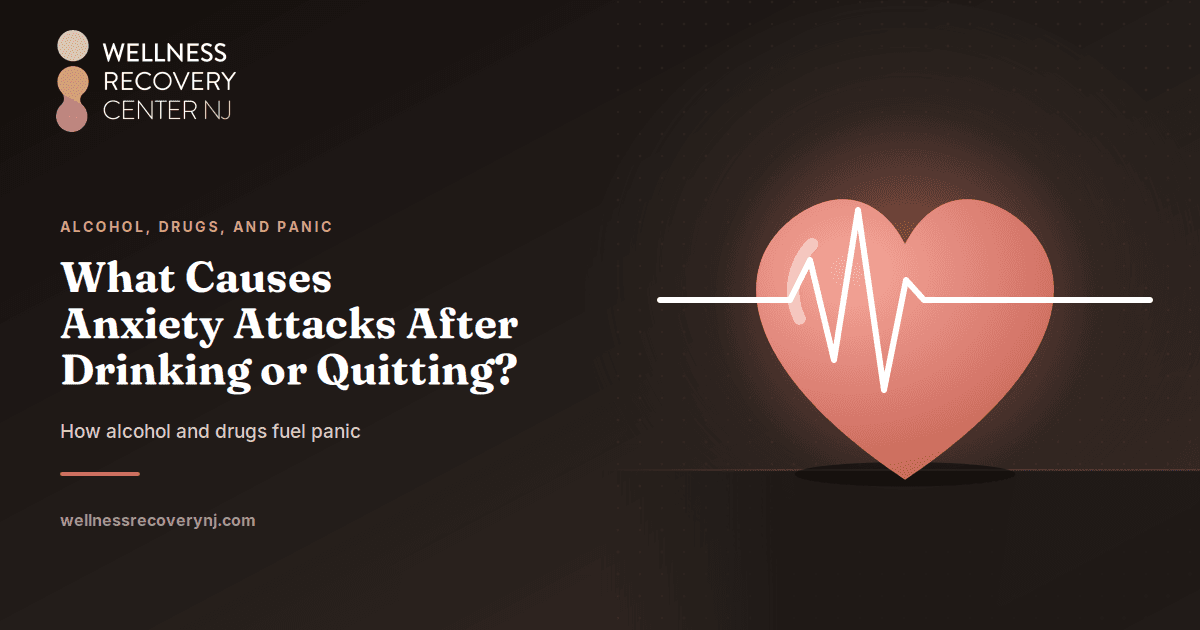
What causes anxiety attacks after drinking or quitting is mostly a nervous system that a substance has pushed one way and that then snaps back the other way.
Alcohol, stimulants, cannabis, and benzodiazepines each trigger panic in different ways, and withdrawal from several of them can be medically dangerous.
Chest pain, confusion, hallucinations, seizures, or a racing pulse that will not settle are emergencies. Call 911.
Anxiety and substance use often occur together, and treating both at the same time works better than treating them one after the other.[1]
Table of Contents
What causes anxiety attacks after drinking? The alcohol and brain connection
Why anxiety and panic spike during withdrawal: what causes anxiety attacks when you stop
How different substances fuel panic: alcohol, stimulants, cannabis, and benzodiazepines
Anxiety attack or withdrawal emergency? Symptoms and warning signs
When anxiety and addiction feed each other: understanding co-occurring disorders
Treatment for anxiety and substance use at Wellness Recovery Center of New Jersey
Introduction
It is 3 a.m., your heart is pounding, your hands are shaking, and you are sure something is badly wrong. Maybe you drank last night. Maybe you stopped drinking two days ago. You want to know what causes anxiety attacks like this, and whether you are in danger.
This article answers both questions. We explain what causes anxiety attacks around alcohol and drug use, how to tell panic from a withdrawal emergency, and what treatment looks like at Wellness Recovery Center of New Jersey. If you are scared right now, you are not weak and you are not alone. This is a body reaction with a known cause.

What causes anxiety attacks after drinking? The alcohol and brain connection
Alcohol is a depressant. It slows the brain by boosting GABA, the chemical that calms nerve activity, and by dampening glutamate, the chemical that excites it. That is why the first drink feels like relief.
The brain does not like being held in one state. With repeated drinking, it turns down its own calming signals and turns up its excitatory ones to compensate. When the alcohol wears off, the brain is left over-revved with no brake. This is the main cause of anxiety attacks the morning after a night of heavy drinking, sometimes called "hangxiety."
Other things pile on top of that:
Poor sleep, since alcohol breaks up deep sleep even when it helps you doze off.
Low blood sugar and dehydration, which can mimic panic with a fast pulse and shakiness.
Stress hormones, which rise as alcohol leaves your system.
Shame or fear about what you said or did, which feeds the loop.
People who drink to manage anxiety often get caught here. The drink quiets the symptoms for an hour and makes the next day's anxiety worse.

Why anxiety and panic spike during withdrawal: what causes anxiety attacks when you stop
Withdrawal is the same rebound, only larger. After weeks or years of heavy use, the brain has rebuilt itself around the substance. Remove the substance and the nervous system runs unchecked.
So what causes anxiety attacks in withdrawal? An overactive stress response: fast heartbeat, sweating, tremor, a sense of dread, and a feeling that you cannot get a full breath. Alcohol withdrawal usually starts within hours of the last drink and can peak over the next one to three days. Our guide to what happens during alcohol detox walks through that timeline.
Some people keep having anxiety and sleep trouble for weeks or months after they stop. This is sometimes called protracted withdrawal. It is real, it usually fades, and it is one reason people relapse when they try to white-knuckle it.

How different substances fuel panic: alcohol, stimulants, cannabis, and benzodiazepines
Each substance has its own path to panic. Knowing which one you are dealing with changes how risky it is to stop.
Substance | How it can trigger panic | Withdrawal risk |
|---|---|---|
Alcohol | Calms first, then rebound hyperactivity as it clears | Can include seizures and delirium tremens |
Stimulants (cocaine, methamphetamine, Adderall misuse) | Floods the body with adrenaline and dopamine while use continues | Crash with anxiety, low mood, and exhaustion |
Cannabis | High-THC use can cause racing thoughts and panic, even in regular users | Irritability, anxiety, and poor sleep for days to weeks |
Benzodiazepines (Xanax, Klonopin, Ativan) | Rebound anxiety between doses or after dose changes | Can include seizures. Stopping suddenly is dangerous |
Stimulants cause panic while you are using, because they push heart rate and adrenaline up. Cannabis surprises many people, since it is often used to relax. At higher doses it can do the opposite.
Benzodiazepines need special care. They work on the same GABA system as alcohol, so long-term use and sudden stopping carry similar risks. Anxiety that returns after you cut a dose is not always your old anxiety. It may be withdrawal.

Anxiety attack or withdrawal emergency? Symptoms and warning signs
A panic attack is frightening but not usually dangerous. It tends to peak within about ten minutes and then ease. Withdrawal can look similar at first, then get worse. When someone who just stopped drinking has an anxiety attack, the safest assumption is that withdrawal may be involved.
Call 911 or go to an emergency room if you or someone else has:
Seizures or fainting
Hallucinations, or seeing or hearing things that are not there
Severe confusion or not knowing where you are
Fever, heavy sweating, and a pulse that stays very fast
Chest pain, or trouble breathing that does not ease
Thoughts of suicide (you can also call or text 988)
Signs that point more toward panic: symptoms arrive in a wave, peak, and fade, and your thinking stays clear. Even so, if you have been drinking heavily or taking benzodiazepines daily and you suddenly stopped, get medical advice before you decide it is "just anxiety."

When anxiety and addiction feed each other: understanding co-occurring disorders
Sometimes the substance is not the whole answer. Anxiety may have been there first, and the substance became a way to cope. Or heavy use may have created the anxiety. Often both are true, and the cycle is hard to untangle alone. We cover the same pattern with mood in our article on depression and substance use in men.
The National Institute on Drug Abuse reports that, according to the 2023 National Survey on Drug Use and Health, 35% of U.S. adults with another mental disorder also have a substance use disorder.[1] NIDA also notes that shared risk factors, including genes and life circumstances, can contribute to both.[1]
Clinicians use the DSM-5-TR, the standard manual for classifying mental disorders, to sort out which diagnoses apply.[2] That matters because anxiety caused by a substance and an anxiety disorder that stands on its own may need different plans.
NIDA states that people with co-occurring conditions typically have a harder time staying in treatment.[1] It also says that treating both conditions at the same time is usually better than treating them separately.[1]
Safe ways to manage panic and why medical detox matters
If you are in the middle of an attack and are not in withdrawal danger, these can help it pass:
Breathe out slowly, longer than you breathe in. Try four counts in, six counts out.
Name five things you can see. It pulls attention out of your body.
Drink water and eat something with some sugar and protein.
Remind yourself that the peak passes, usually within minutes.
Do not drink more to take the edge off, and do not quit alcohol or benzodiazepines cold turkey if you have been using heavily. Withdrawal from both can cause seizures, and you cannot predict the risk from how you felt last time.
In medical detox, doctors monitor your vital signs, treat symptoms, and adjust medication as your body settles. The American Society of Addiction Medicine, a medical society of more than 8,000 physicians and clinicians founded in 1954, publishes the ASAM Criteria, the guidelines used to match people to the right level of care, including those with co-occurring conditions.[3] If you want to know whether medication can help after detox, see our post on medication in alcohol treatment.
Treatment for anxiety and substance use at Wellness Recovery Center of New Jersey
At Wellness Recovery Center of New Jersey, we treat the anxiety and the substance use together. Once you are medically stable, care can step down through levels that fit your life:
Partial hospitalization for daily, structured treatment while you live at home or in supportive housing.
Intensive outpatient for several sessions a week around work or family.
Outpatient program for ongoing support as you stabilize.
Mental health IOP when anxiety needs focused attention.
Dual diagnosis treatment for anxiety and addiction treated as one plan.
Therapy for panic often includes skills for catching the early body signals and learning that they pass. For people whose anxiety traces back to trauma, EMDR therapy may be part of the plan. If you are unsure where to begin, here is what the first day looks like. You can also find programs through SAMHSA, which lists a National Helpline and a treatment locator, FindTreatment.gov.[4]
Frequently Asked Questions
Q: What causes anxiety attacks the day after drinking ("hangxiety")?
A: Alcohol boosts calming brain signals while you drink. As it clears, the brain is left overexcited, and poor sleep, dehydration, and stress hormones add to it. That rebound causes anxiety attacks the next day, and it usually eases within a day or two.
Q: Can quitting alcohol or drugs cause panic attacks, and how long do they last?
A: Yes. Acute withdrawal anxiety often lasts days. For some people, lingering anxiety and poor sleep continue for weeks or months, gradually improving. How long it lasts depends on the substance, how much and how long you used, and whether you have an underlying anxiety disorder.
Q: How can I tell the difference between a panic attack and dangerous alcohol or benzodiazepine withdrawal?
A: A panic attack comes in a wave, peaks in about ten minutes, and fades with clear thinking. Withdrawal danger shows up as seizures, confusion, hallucinations, fever, or a fast pulse that does not settle. If you are unsure and recently stopped, treat it as possible withdrawal and call 911 or go to the emergency room.
Q: Is it safe to stop drinking or taking benzodiazepines on my own if I have anxiety?
A: Not if you have used heavily or daily. Stopping alcohol or benzodiazepines suddenly can cause seizures. Talk to a doctor or a medical detox program first so the dose or the withdrawal can be managed safely.
Q: Can I get treated for anxiety and addiction at the same time?
A: Yes, and it is usually the better approach. NIDA says treating co-occurring conditions together can make all the treatments more effective and improve health outcomes.[1]
Conclusion
Anxiety attacks around alcohol and drugs come from a nervous system that has been pushed hard and is swinging back. That explains the 3 a.m. pounding heart. It also explains why stopping alone can be risky, and why the anxiety is treatable.
If you or someone you love keeps asking what causes anxiety attacks and the answer points to drinking or drug use, reach out to Wellness Recovery Center of New Jersey at wellnessrecoverynj.com. We will listen, tell you what level of care fits, and help you start. If symptoms are severe right now, call 911 first.
References
National Institute on Drug Abuse. Co-Occurring Disorders and Health Conditions. https://nida.nih.gov/research-topics/comorbidity
American Psychiatric Association. Diagnostic and Statistical Manual of Mental Disorders (DSM-5-TR). https://www.psychiatry.org/psychiatrists/practice/dsm
American Society of Addiction Medicine. ASAM - American Society of Addiction Medicine. https://www.asam.org
Substance Abuse and Mental Health Services Administration. Substance Use Disorder Treatment. https://www.samhsa.gov/substance-use/treatment
Ready to talk to someone?
Confidential, judgment-free, available 24/7.